Egypt’s Maritime Renaissance: Building a Global Trade Hub
Egypt is witnessing one of the most ambitious maritime transformations in its modern history. Across the nation’s coastline from the Mediterranean to the Red Sea ports are being reshaped into world-class logistics and trade centers designed to serve global shipping routes. The transformation is not only physical but strategic: Egypt is positioning itself as a global maritime hub that connects continents, powers economies, and redefines regional logistics.
A Maritime Legacy Reinvented
Egypt’s bond with the sea runs deep. For thousands of years, it has served as a gateway between Africa, Asia, and Europe. Today, that heritage is being reinvented through large-scale infrastructure projects, international partnerships, and advanced digital port management systems.
Modern Egypt’s maritime revival began with the Suez Canal, a masterpiece of 19th-century engineering that still carries nearly 12% of global trade. But in the 21st century, the story goes beyond the canal. It’s a story of strategic investment, smart ports, and logistics corridors designed to make Egypt not just a crossing point, but a global center for cargo handling, industrial growth, and sustainable trade.
Modern Infrastructure Driving Growth
Under the national strategy for ports development, Egypt has expanded and upgraded its entire maritime network. Between 2014 and 2023, berth lengths increased from 37 km to 67 km, depths deepened to 18 meters, and port areas nearly doubled. By 2030, Egypt targets a capacity of 400 million tons of goods and 40 million containers annually, supported by 100 km of modern berths.
Flagship projects include:
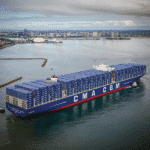
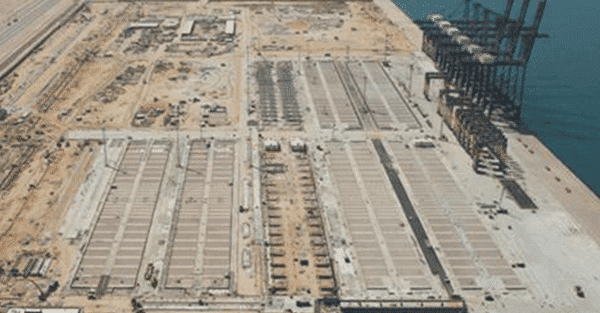
· Ain Sokhna Port Egypt’s first fully smart terminal, developed in partnership with global operators such as Hutchison Ports, COSCO, and CMA CGM. The port integrates AI-driven crane systems, GPS tracking, and low-emission equipment, making it one of the most advanced on the Red Sea.
· Alexandria Port handling around 60% of Egypt’s foreign trade, Alexandria continues to expand with new terminals, digitized operations, and upgraded logistics zones.
· Damietta Port the nation’s first fully digital port, pioneering automation and smart logistics for faster, safer cargo movement.
· Safaga and Nuweiba Ports upgraded for both commercial and tourism traffic, enhancing Egypt’s role in regional connectivity and ferry operations.
These developments are transforming Egypt’s ports into integrated ecosystems that connect seaports, dry ports, industrial zones, and inland terminals.
The Red-to-Med Corridor: Egypt’s New Trade Artery
At the heart of Egypt’s logistics vision lies the Red-to-Med Corridor, a multimodal transport axis linking Ain Sokhna on the Red Sea to Dekheila and Alexandria on the Mediterranean. This high-speed, electric-powered route including rail, road, and logistics hubs will allow cargo to cross Egypt in under 24 hours.
Once fully operational, the corridor will redefine how goods flow between Asia and Europe, creating the shortest, most efficient, and secure passage between the two continents. It will also ensure that Egypt’s ports work together as a unified network rather than as competitors, strengthening national economic integration.
Partnership and Global Connectivity
Egypt’s maritime rise has been accelerated by strong international collaboration especially with China under the Belt and Road Initiative (BRI). Projects such as Ain Sokhna’s new terminal showcase the blending of Egyptian strategic geography with global expertise.
Chinese port-equipment manufacturer ZPMC has supplied advanced cranes and gantry systems to Egyptian terminals, enabling faster vessel turnaround and semi-automated operations. Egyptian engineers trained alongside Chinese specialists now operate these high-tech systems, marking a milestone in knowledge transfer and skills development.
Trade between Egypt and China exceeded $15 billion in 2024, much of it transported by sea. These flows underline Egypt’s emerging role as a reliable logistics partner at the intersection of Africa, Asia, and Europe.
Sustainability and Smart Port Technology
Sustainability has become a cornerstone of Egypt’s maritime strategy. Ports such as Ain Sokhna are being developed as “green ports”, featuring electric cranes, energy-efficient lighting, stormwater recycling, and AI-powered control systems to reduce emissions.
This approach aligns with Egypt’s environmental commitments announced at COP27 and positions the country as a regional leader in sustainable logistics. The adoption of digital systems including electronic documentation, centralized cargo tracking, and smart traffic management further enhances efficiency while reducing carbon footprints.
Economic and Industrial Impact
The transformation of Egypt’s ports is creating significant economic momentum. Each new terminal and logistics park generates thousands of direct and indirect jobs in construction, maintenance, warehousing, and ship services.
More importantly, the ports are acting as magnets for foreign investment. Companies from China, the UAE, and Europe are establishing operations within the Suez Canal Economic Zone (SCZone) to manufacture and export goods through Egyptian ports.
According to Walid Gamaleddin, Chairman of the SCZone, “Our vision is to make Ain Sokhna the beating heart of the zone a digital, sustainable port where Africa meets Asia.”
This expansion complements Egypt’s wider economic goals of increasing export competitiveness, promoting industrialization, and becoming a logistics gateway for the Middle East and Africa.
Beyond Infrastructure: A Vision for Integration
Egypt’s maritime strategy under President Abdel-Fattah El-Sisi is not just about building ports; it’s about building systems. Through an $8 billion national investment program, the government aims to integrate maritime infrastructure with industrial clusters, energy projects, and inland logistics networks.
The outcome will be a seamless supply chain from factory to ship to global market ensuring that Egypt becomes a central link in the world’s logistics map.
The Role of Marine Logistics Partners
Behind every successful port operation lies a network of specialized maritime service providers companies that manage supplies, coordinate logistics, and ensure vessels operate safely and efficiently. These partners are essential to the daily rhythm of maritime trade.
As Egypt’s ports expand and modernize, the need for reliable marine logistics, technical support, and coordination becomes ever more critical.
A Trusted Maritime Partner: Karimar Ship Services
With years of experience serving vessels across Egyptian ports, Karimar Ship Services stands as a trusted name in marine logistics and port operations. The company provides a full spectrum of maritime support from ship supply and crew coordination to customs clearance, fuel arrangements, and technical assistance.
Karimar’s presence across key Egyptian ports allows shipowners, agents, and operators to access dependable on-ground support aligned with international standards. The company’s commitment to efficiency, safety, and professionalism reflects Egypt’s broader vision for a modern, connected, and sustainable maritime sector.
As Egypt cements its position as a global maritime hub, companies like Karimar continue to play a pivotal role ensuring that every vessel calling Egyptian ports experiences seamless service, operational excellence, and the hallmark of maritime reliability that defines the nation’s new era at sea.